

Spoleto Viaduct
Archeologia
A majestic medieval aqueduct dominating the Spoleto valley. An iconic symbol of the city, over 230 metres long and 76 metres high.
Location in Umbria
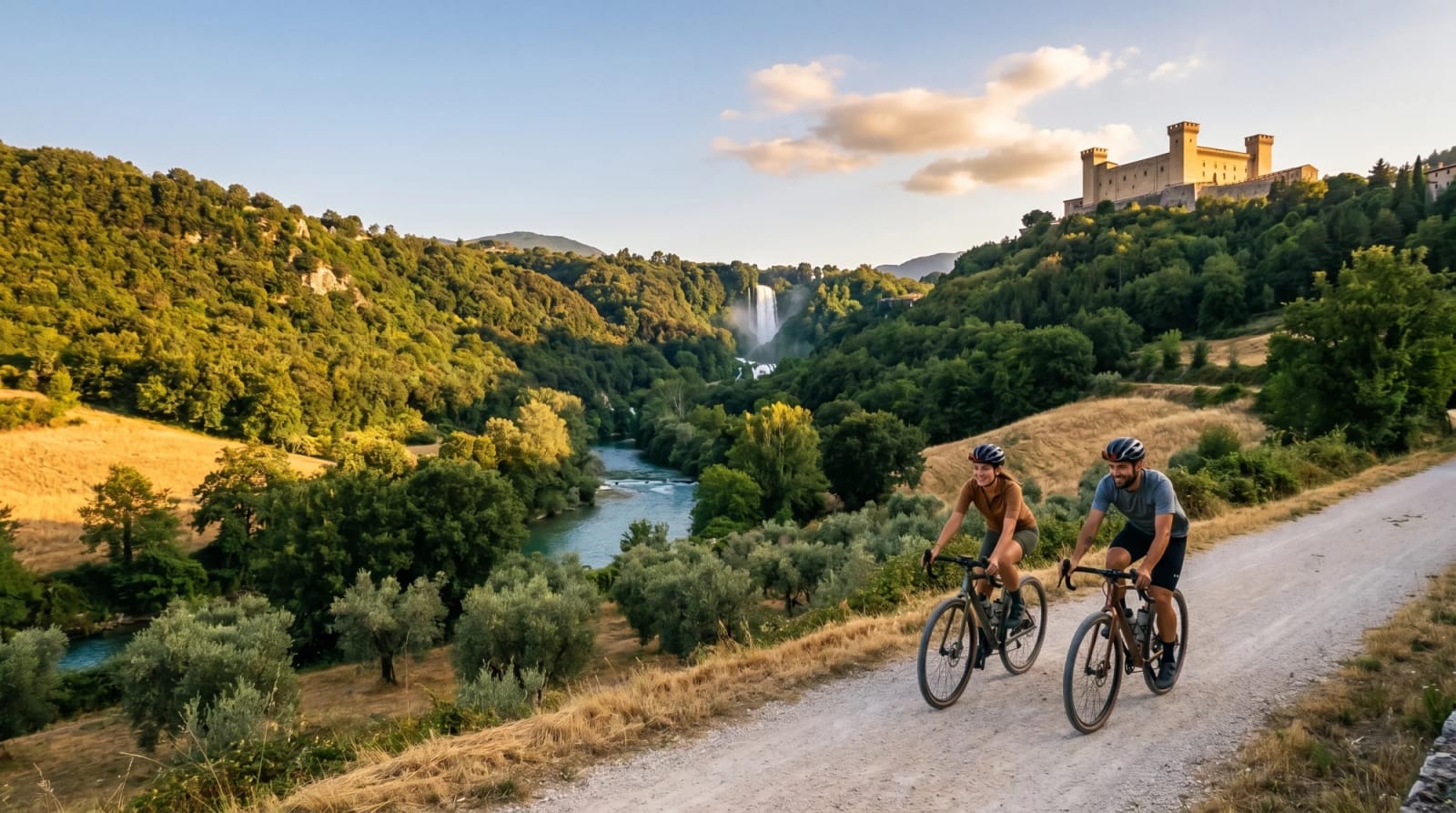
Former Spoleto-Norcia railway, Marmore Falls
About Spoleto and Valnerina
The Nera valley and the city of Spoleto, between Roman and medieval history, waterfalls and the former railway.
The points of interest you come across on the experiences available in this area, grouped by municipality.
Archeologia
A majestic medieval aqueduct dominating the Spoleto valley. An iconic symbol of the city, over 230 metres long and 76 metres high.
Altro
Former railway line decommissioned in 1968, now a 23 km cycle-pedestrian path running through woods, viaducts and tunnels between Spoleto and Piedipaterno. One of Umbria's most evocative cycling routes, with minimal elevation gain and spectacular natural scenery.
Chiesa / Abbazia
A 12th-century Romanesque masterpiece, with a golden-mosaic façade and an apse frescoed by Filippo Lippi. Considered one of Umbria's most beautiful cathedrals, it opens onto a strikingly elegant sloping square in the heart of Spoleto's historic centre.
Archeologia
A medieval bridge-aqueduct of Roman origin that crosses the gorge between the Sant'Elia hill and Monte Monteluco. At 230 metres long and 76 metres high, it's one of Spoleto's most iconic monuments and offers a privileged viewpoint over the valley.
Panorama
The Sacred Wood of Monteluco, above Spoleto, is a holm oak forest protected since the 6th century BC by a sacred decree. Crossed by silent trails, it offers glimpses of the city and the Spoleto plain. An ideal destination to reach by climbing from the centre.
Chiesa / Abbazia
Benedictine abbey founded in the 6th century on the wooded slopes of Monte Monteluco. Set within a sacred holm oak grove, it preserves medieval architecture and a 13th-century cloister of rare beauty. An ideal destination at the end of a climbing route through the woods.
Natura / Gola
A natural canyon shaped by the Nera river between limestone walls up to 200 metres high. Home to golden eagles and peregrine falcons, frequented by climbers from around the world but also accessible by bike along the valley-floor road.
Chiesa / Abbazia
A small early-Christian church carved into the rock at Ferentillo, containing the natural mummies of villagers who died between the 17th and 19th centuries. A unique and unexpected place, reachable by bike along the Valnerina.
Centro storico
A tiny walled medieval village on the Nera river, among the best preserved in the Valnerina. The walls run down to the water and enclose a residential core of rare integrity. Famous for black truffle hunting and for the restaurants that feature it, it's an unmissable culinary and scenic stop along the Valnerina cycle routes.
Natura / Gola
One of Europe's tallest man-made waterfalls, created by the Romans in 271 BC to channel the waters of the Velino into the Nera. With a total drop of 165 metres over three tiers, it's a natural spectacle of rare beauty set in the green Valnerina.