


Historic Centre of Montefalco
Centro storico
Medieval hill village surrounded by 13th-century walls, nicknamed 'the Balcony of Umbria' for its 360-degree view stretching from the Apuan Alps to the Abruzzo Apennines. Home of the Sagrantino DOCG wine.
Location in Umbria · Terni e dintorni
Big Bench Route, Tiber hills, medieval villages, Frainetto Wood
About Montecastrilli and the Terni Basin
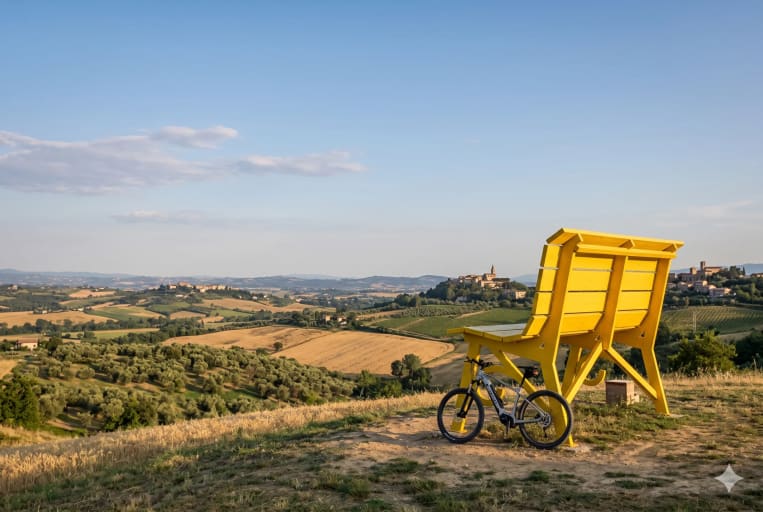
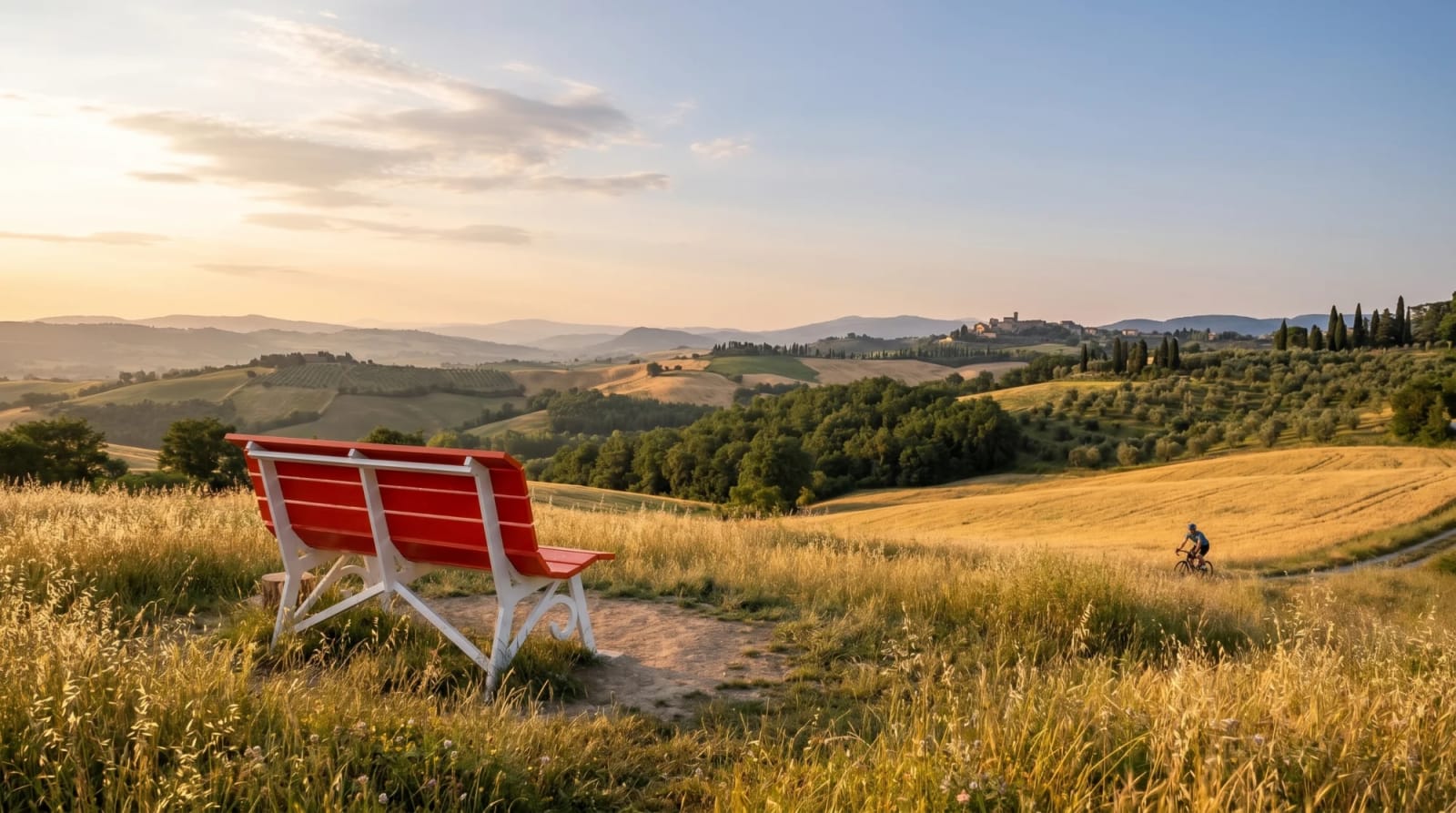
Rolling hills between Terni and the Tiber river, with medieval villages, holm oak and oak woods, vineyards and a unique network of trails. Montecastrilli is home to the world's first Big Bench Route: six oversized benches installed in the town centre and the hamlets of Farnetta, Castel dell'Aquila, Quadrelli, Casteltodino and Collesecco.
The points of interest you come across on the experiences available in this area, grouped by municipality.
Centro storico
Medieval hill village surrounded by 13th-century walls, nicknamed 'the Balcony of Umbria' for its 360-degree view stretching from the Apuan Alps to the Abruzzo Apennines. Home of the Sagrantino DOCG wine.
Enogastronomia
Historic vineyards wrapping the hills around Montefalco. The Sagrantino, a native red grape of very ancient origin, produces a tannic, long-lived wine among the most acclaimed worldwide. Riding these roads between the rows is a unique sensory experience.
Panorama
Montefalco's town tower, 26 metres high, offers central Umbria's most celebrated viewpoint: Spoleto, Foligno, Assisi, Spello and the Sibillini Mountains in the distance are all visible. An essential stop for those riding through this area.
Chiesa / Abbazia
Former 14th-century Franciscan church, now a museum hosting the cycle of frescoes by Benozzo Gozzoli dedicated to the life of St Francis. Considered one of the masterpieces of the Umbrian Renaissance, it also houses works by Perugino and Tiberio d'Assisi.
Centro storico
An ancient medieval hill village perched on a rocky spur in the Valley of Spoleto, among olive groves and cypresses. Famous for producing some of Italy's finest DOP extra-virgin olive oil, it offers a historic centre of arches, fountains and a civic tower with views over the plain.
Enogastronomia
The olive groves surrounding Trevi produce an outstanding DOP extra-virgin olive oil, with an intense fruity profile and a distinctive peppery finish. Riding among the rows of olive trees in autumn, during the harvest, is one of Umbria's most authentic sensory experiences.
Naturalistico
Giant Bench No. 343 on the edge of the ancient Via Amerina, today the Way of Light. Reached from Farnetta along 21 km of countryside and woodland. The setting evokes the most authentic, off-the-beaten-track Umbria.
Naturalistico
Giant Bench No. 345 in the medieval village of Casteltodino, the last stop on the loop before returning to Montecastrilli. A hilltop village overlooking the Tiber valley. The bench closes the circuit of the town's six Big Benches.
Naturalistico
Giant Bench No. 342 at Collesecco, reachable through Casteltodino across open countryside and ancient castles. Stop on the Quadrelli–Collesecco segment (9 km), with lovely views over the hills towards the Tiber.
Naturalistico
Giant Bench No. 346 set in the rural landscape of Farnetta, reachable through the atmospheric Frainetto Wood. First stop on the Big Bench Route loop, 9 km from the Montecastrilli information point. Views over the hills and Farnetta castle.
Naturalistico
Giant Bench No. 341 of the Big Bench Community Project, set above the town of Montecastrilli overlooking what was once the Tiberino Lake, with a view of the castle destroyed by the condottiero John Hawkwood. One of the most panoramic on the entire loop.
Naturalistico
Giant Bench No. 344 near the medieval castle of Quadrelli. An easy stop (11 km from Montecastrilli) with minimal elevation gain, set among the vineyards and olive groves of the Terni basin. Open view over the surrounding hills.
Centro storico
Medieval hill village in the heart of the Umbrian Valley, with still-intact Roman walls, flower-decked arches and alleys filled with geraniums. Famous for the Calendimaggio festival and for the basilica of Santa Maria Maggiore with frescoes by Pinturicchio.